

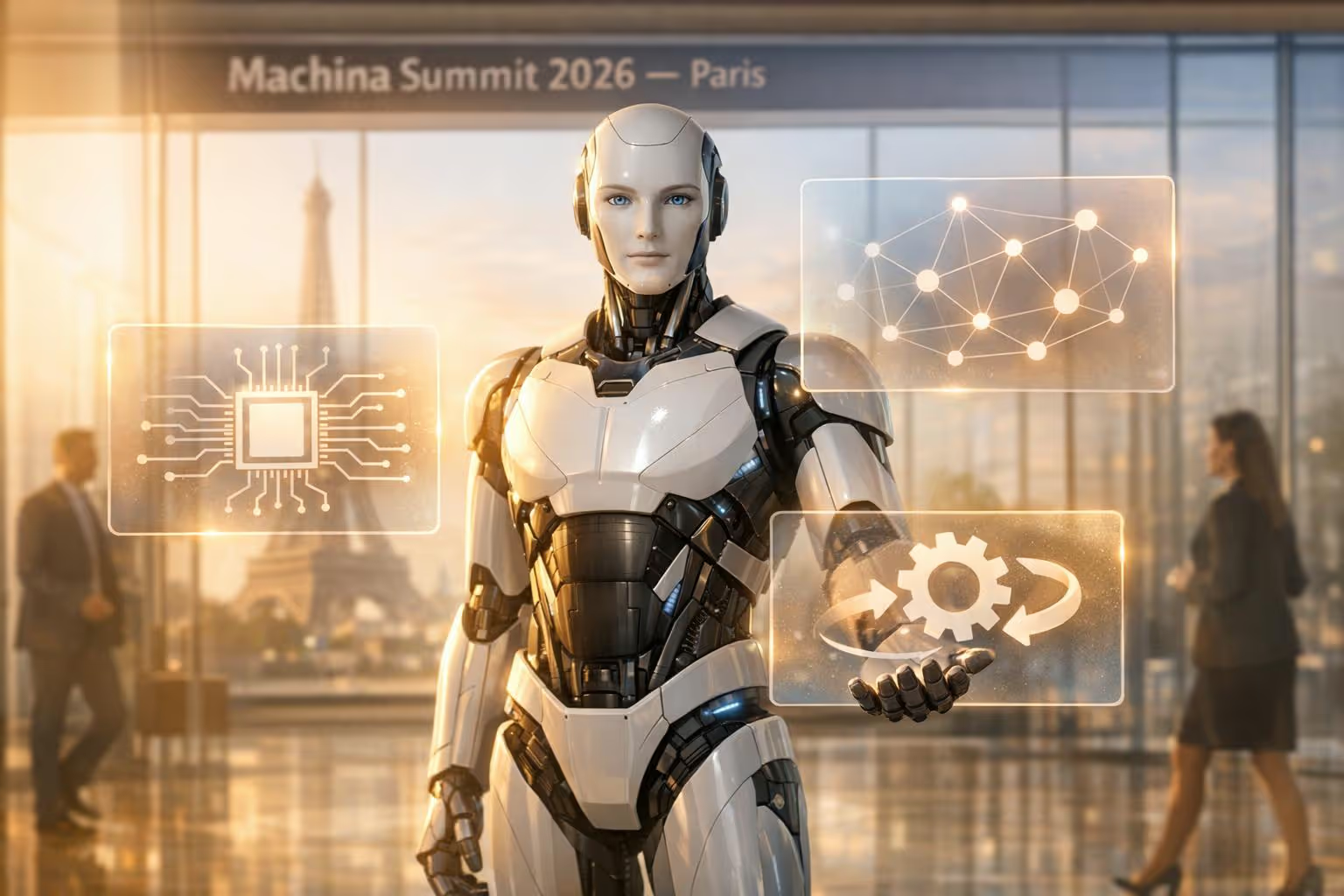
Want a glimpse into the future of robotics? On 7 July 2026, the Machina Summit in Paris will showcase how AI is evolving from software to physical machines like humanoid robots and industrial automation systems. With over 9,000 attendees, including top executives, investors, and policymakers, this event focuses on integrating robots into industries such as manufacturing, healthcare, and logistics.
Key Highlights:
- Humanoid Robots on Display: Tesla Optimus Gen 3, Figure AI's Figure 02, and Boston Dynamics Atlas.
- AI Hardware Innovations: NVIDIA's Jetson Thor and AMD Instinct MI300X for advanced robot intelligence.
- Industry Applications: Robots reducing costs and increasing efficiency in factories, warehouses, and healthcare.
- Workshops and Networking: Over 350 speakers and sessions on scaling robotics, hardware-software integration, and ROI analysis.
Tickets start at €699, with VIP options for exclusive networking. This is your chance to connect with global leaders and explore robotics transforming industries.
An Introduction to Building Humanoid Robots | NVIDIA GTC 2025
sbb-itb-e314c3b
Leading Exhibitors and Humanoid Prototypes

Humanoid Robot Comparison: Tesla Optimus Gen 3 vs Figure 02 vs Boston Dynamics Atlas
At Machina Summit 2026, humanoid prototypes take center stage, showcasing how advanced AI software integrates with cutting-edge hardware. On display are three standout platforms that highlight different takes on embodied AI: Tesla's Optimus Gen 3, Figure AI's Figure 02, and Boston Dynamics' electric Atlas. Each brings its own flair to the future of robotics.
Tesla Optimus: Gen 3 Capabilities
Tesla's Optimus Gen 3 takes the company's automotive expertise and applies it to robotics. Standing 1.73 meters tall and weighing 57 kilograms, the robot is equipped with a 22-degree-of-freedom tendon-driven hand system, designed to handle delicate tasks like managing fragile battery cells [3][4]. Its additional 3 degrees of freedom in the wrist and forearm allow for impressive precision, reportedly outperforming human trainees in certain tasks [3][4].
The robot operates on Tesla's FSD-v15 neural architecture, the same system powering its self-driving vehicles. This enables vision-based autonomy in unpredictable factory settings, treating the robot as a "vehicle with legs and hands" [3][4]. Integrated Grok AI enhances its ability to follow verbal instructions and collaborate with human colleagues [4]. As of early 2026, over 1,000 Optimus units are hard at work in Tesla's Gigafactory Texas and Fremont facilities, autonomously handling parts for 4680 battery cell production lines [3][4].
Tesla's vertically integrated approach allows it to produce custom actuators and batteries in-house. The Gen 3 is powered by a 2.3 kWh lithium-sulphur battery, enabling 24-hour operation, and features a 16-core Tesla AI chip alongside 50 actuators - 28 in the body and 22 in the hands [4]. Tesla plans to ramp up production to 1 million units annually by late 2026 at its Fremont facility, with an even larger factory under construction at Gigafactory Texas, aiming for a 10-million-unit capacity by 2027 [3][4].
"We think Optimus will be much more capable than any robot that we are aware of under development in China, so we think we'll be ahead in terms of the real-world intelligence and the electromechanical dexterity." - Elon Musk, CEO, Tesla [5]
Figure AI's Figure 02: Industrial Design
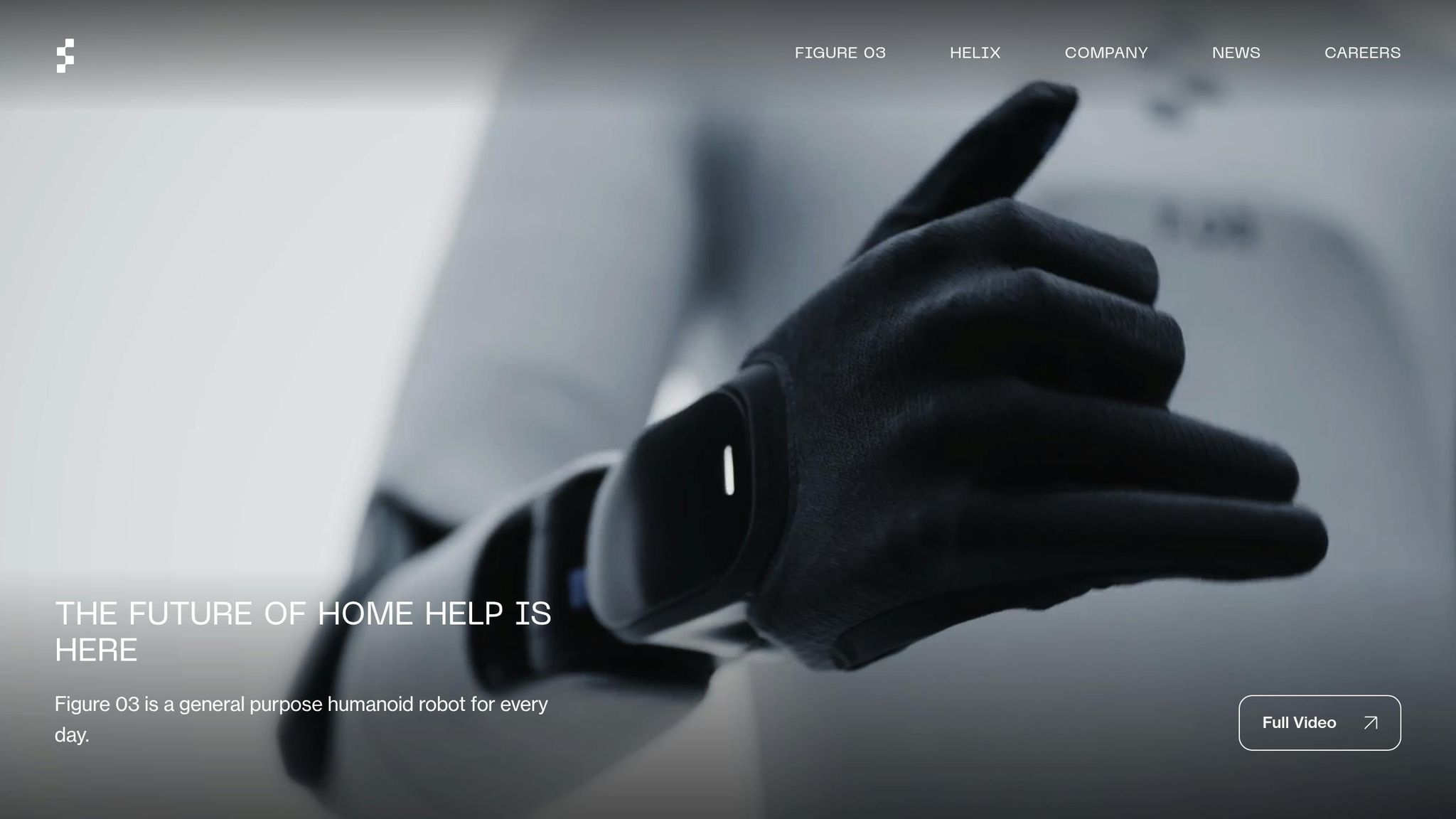
Figure AI's Figure 02 is tailored for industrial settings, standing 168 centimeters tall and weighing 70 kilograms. Its design allows it to navigate human-centric spaces like stairs and ladders while using standard tools [8]. With 16 degrees of freedom in its hands, the robot excels in fine motor tasks, and its 20-kilogram payload capacity combined with a 5-hour battery life makes it well-suited for 10-hour factory shifts [7][8].
Between early 2024 and late 2025, Figure AI deployed the Figure 02 at BMW Group's Plant Spartanburg. During this time, the robots loaded over 90,000 parts into welding fixtures, contributing to the production of 30,000 BMW X3 vehicles [7]. Operating for over 1,250 hours, the robots achieved a 2-second part-load speed with a 5-millimeter tolerance on repetitive heavy tasks [7].
This pilot program highlighted areas for improvement, such as issues with dynamic cabling in the wrist. These insights informed the development of the Figure 03, which features a redesigned architecture [7]. The Figure 02 also transitioned from hand-coded C++ logic to a unified neural network, integrating walking and manipulation into a single system [7].
"Figure 03 isn't just a newer model; it is a robot built from the 'scars' of the factory floor." - Kai Dong, Chia, Editor, Aparobot [7]
Boston Dynamics Atlas: Electric Mobility
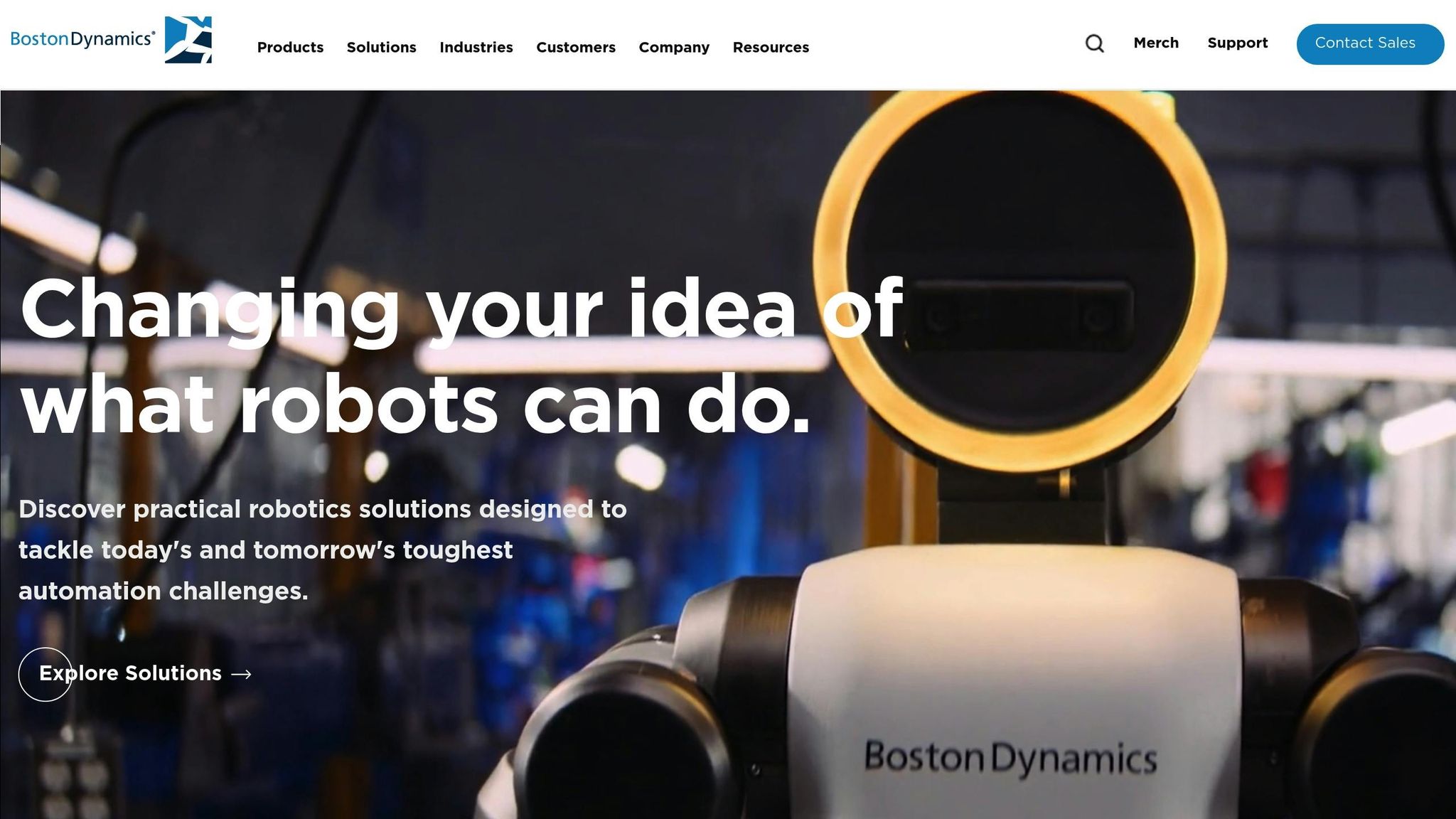
Boston Dynamics' electric Atlas represents a move away from hydraulic systems to efficient electric actuators, making it more scalable and compatible with automotive supply chains [9][6]. With 56 degrees of freedom and fully rotational joints, Atlas achieves a range of motion that often surpasses human capabilities [9][10][6]. Standing 1.9 meters tall and weighing 90 kilograms, it can lift up to 50 kilograms instantly, with a sustained capacity of 30 kilograms. Its maximum reach extends to 2.3 meters [9][10][11].
Atlas is built for continuous operation, autonomously navigating to charging stations to swap its batteries as needed. With a 4-hour battery life, this system enables 24/7 functionality [9][12]. Designed for demanding environments, it carries an IP67 rating and operates in temperatures ranging from -20° to 40° C [9][10]. Boston Dynamics has also partnered with Google DeepMind to enhance Atlas' cognitive and decision-making abilities using advanced AI models [9][11].
As of January 2026, Boston Dynamics announced that its initial production fleet of electric Atlas robots is fully booked for the year. Units are being shipped to Hyundai's Robotics Metaplant Application Centre (RMAC) for industrial tasks and to Google DeepMind for AI research [9][11]. Hyundai, which owns a majority stake in Boston Dynamics, has committed $26 billion to its U.S. operations, including a robotics factory capable of producing 30,000 units annually [11].
| Feature | Atlas Specification |
|---|---|
| Degrees of Freedom | 56 [9] |
| Max Lift (Instant) | 50 kg [10] |
| Height / Weight | 1.9 m / 90 kg [10] |
| Environmental Protection | IP67 [10] |
| Operating Temperature | -20° to 40° C [9] |
| Battery Life | 4 hours (self-swapping) [10][12] |
| Maximum Reach | 2.3 m [9][11] |
These humanoid prototypes demonstrate the incredible advancements in AI and robotics, each offering a unique approach to solving complex challenges in real-world environments.
AI Hardware for Humanoid Robotics
Behind the impressive humanoid prototypes lies cutting-edge AI hardware that powers their real-time capabilities. These advanced systems make it possible for humanoid robots to process vision, understand natural language, and make decisions instantaneously. They bridge the gap between cloud-based training and on-site (or "edge") deployment, enabling robots to operate effectively in dynamic environments.
NVIDIA's Project GR00T and Jetson Thor
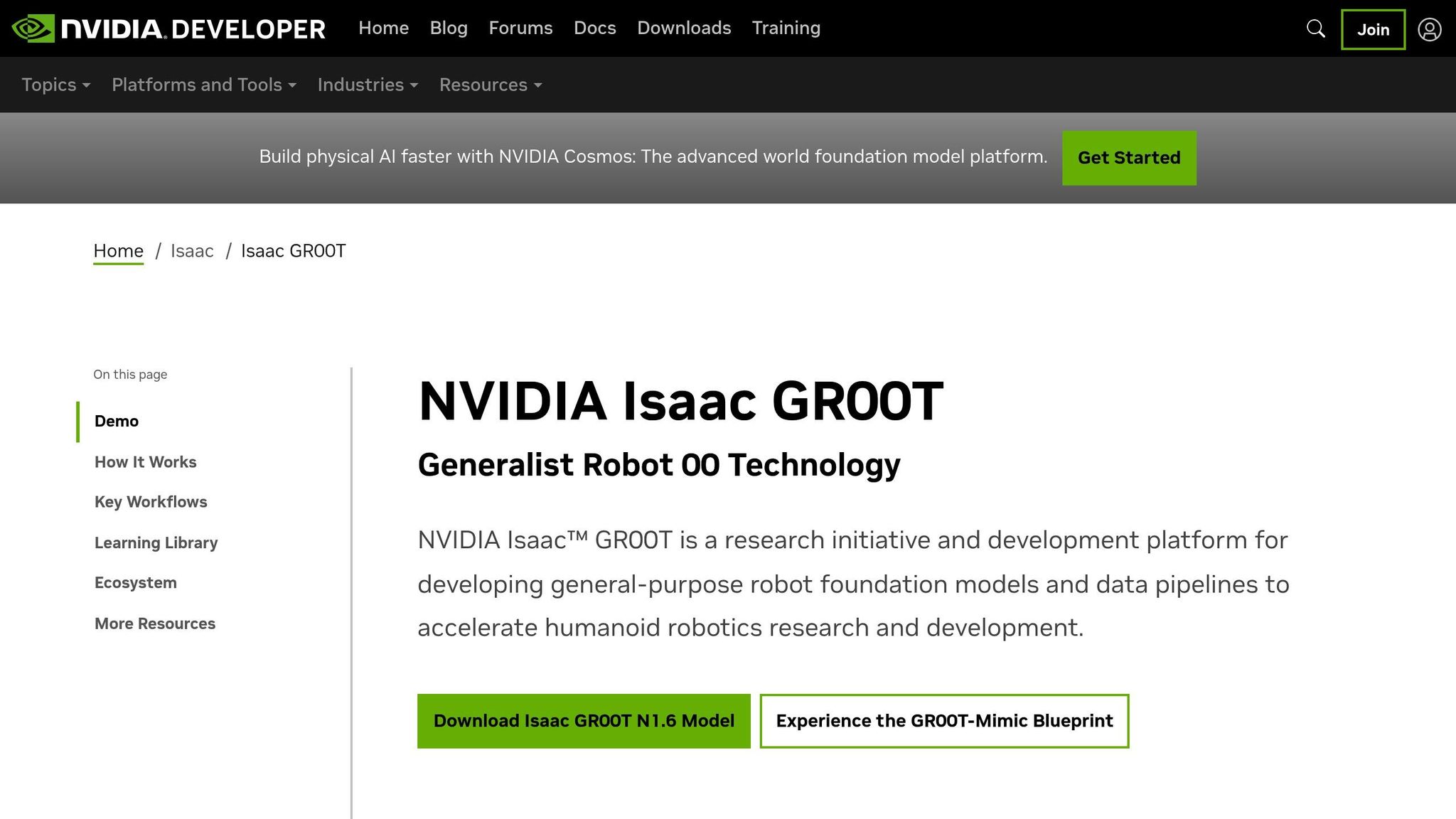
NVIDIA's Jetson Thor is a robotics supercomputer built on the Blackwell architecture. It’s designed to meet the complex demands of multimodal and generative AI applications in humanoid robots. This platform is capable of running large transformer models directly at the edge, allowing robots to reason and act in real time without relying heavily on cloud connectivity.
Project GR00T (Generalist Robot 00 Technology) takes things further by providing a foundational AI model. This model enables humanoid robots to understand natural language and mimic human movements by observing them. Essentially, it allows robots to learn tasks by watching humans, making them more adaptable to real-world scenarios. With its ability to execute vision-language models locally, this technology ensures robots can navigate intricate environments and respond quickly to changes.
AMD Instinct MI300X: AI Inference Performance
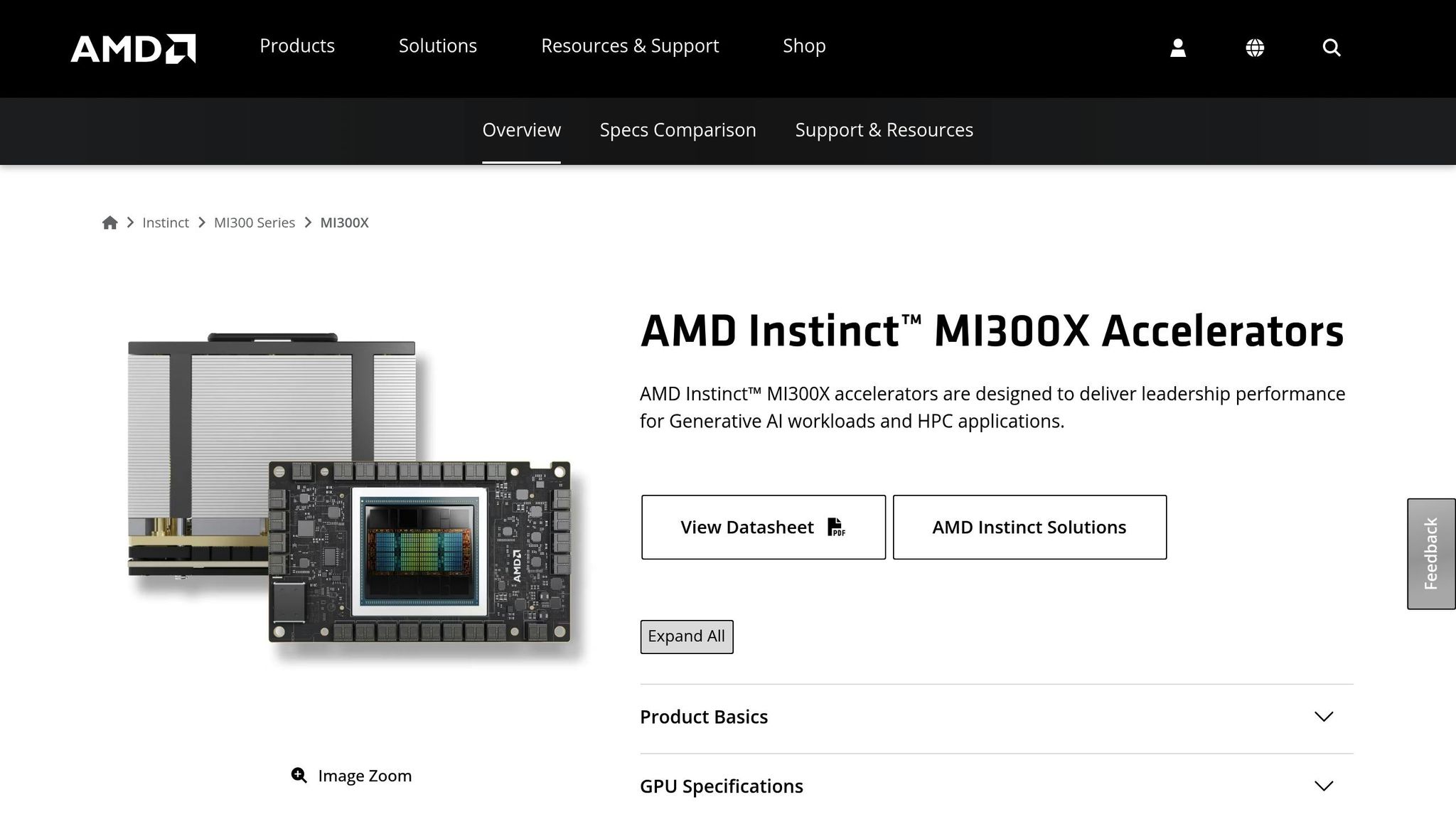
AMD’s Instinct MI300X accelerator is another key player in the backend systems that power humanoid AI. Featuring 192 GB of HBM3 memory, the MI300X is designed to handle the massive language and vision models essential for advanced humanoid reasoning. Performance benchmarks reveal its capabilities: eight MI300X accelerators outperform NVIDIA's H100 by 1.3× on Meta Llama-3 70B inference tasks, while a single MI300X achieves 1.2× better throughput on Mistral-7B.
The accelerator integrates seamlessly with popular AI frameworks like PyTorch, TensorFlow, and JAX through AMD's ROCm 6 ecosystem, simplifying deployment. Microsoft Azure has already incorporated these accelerators into its ND MI300X V5 virtual machines to support demanding AI workloads, including industrial robotics. AMD’s commitment to innovation is evident in its move to an annual product release schedule, with the MI325X set for late 2024 and the MI350 series anticipated in 2025.
"With our updated annual cadence of products, we are relentless in our pace of innovation, providing the leadership capabilities and performance the AI industry and our customers expect to drive the next evolution of data centre AI training and inference." - Brad McCredie, Corporate Vice President, Data Centre Accelerated Compute, AMD [13]
Conference Sessions and Workshops
Machina Summit 2026 offers targeted sessions that tackle real-world challenges in deploying humanoid robots on a large scale. Industry leaders and engineers will dive into system-level coordination and strategies to seamlessly integrate robots into existing industrial setups. These sessions go beyond the showcased technologies, focusing on the technical intricacies that drive the next wave of humanoid robotics.
Scaling Humanoid Robotics for Industry
The industrial track zeroes in on moving from controlled demonstrations to reliable, full-scale factory operations. Topics include operational integration, safety standards, and evaluating ROI, all while addressing how robots can be implemented without requiring major overhauls of current facilities - an essential factor for manufacturers. Esteemed speakers like Marc Theermann (Boston Dynamics), Sankaet Pathak (Foundation Bot), and Jesse Liu (Limx Dynamics) will lead these discussions, exploring the point at which robots can match human performance in unpredictable settings.
"The next phase of humanoid robotics is not about better robots but better coordination." - Christophe Jean Louis, Robot‑magazine.fr
Attendees will also review real-world applications, such as Machina Labs' 200,000‑square‑foot (approximately 18,600 m²) Intelligent Factory in the U.S. This facility, featuring 50 robotic cells, has drastically reduced production timelines from months to mere days, backed by a $124 million Series C funding round [14].
Hardware‑Software Integration in Robotics
Workshops will delve into bridging the "sim-to-real" gap, where robots are trained in virtual environments before being deployed. Sessions will explore Vision‑Language‑Action models capable of real-time decision-making without relying on cloud-based systems, as well as the role of high-torque actuators in ensuring accurate and safe movements around humans. The financial aspect is also a key focus: actuators alone can account for up to 70% of a humanoid robot's production costs [15].
"Actuators represent up to 70% of production costs, making them both a technical and economic driver in humanoid scalability." - Houston Yu, ZeroErr [15]
Participants will also learn how advanced simulation platforms enhance scalability by collecting diverse data and incorporating human-in-the-loop strategies.
"The hardest problem in humanoid robotics is no longer mechanical movement - it is instant human understanding. Recognising intent. Tracking gestures like a handshake. Adapting personality." - Dr. Sharon Yang, IntBot [15]
AI Hardware Comparison for Humanoids
A dedicated session will provide a side-by-side evaluation of hardware platforms, focusing on factors such as compute power, efficiency, and system compatibility. Attendees will gain insights into assessing total operational costs, including training infrastructure and safety validation, to select the most suitable components for their needs. The session will wrap up with a direct comparison of AI hardware metrics, helping participants identify the best options for specific use cases.
| Hardware Platform | AI Compute / Key Metric | Pros | Cons |
|---|---|---|---|
| NVIDIA Jetson Orin | 100 TOPS | Industry standard with extensive library support | Higher power consumption limits battery life |
| Qualcomm RB6 | High‐efficiency AI | Excellent 5G connectivity and low power usage | Smaller developer community compared to NVIDIA |
| AMD Instinct MI300X | AI Inference | Ideal for large-scale model training | Rack-mounted design unsuitable for on-robot use |
The discussion will also highlight the importance of matching hardware to its environment. For example, warehouse logistics may require robots with robust balance and high payload capacities, while hospitality applications might prioritise conversational AI and facial recognition capabilities. Given that operating times typically range from one to four hours, power efficiency becomes a critical factor for industrial deployments [16][17].
Business Applications and ROI
Humanoids in Manufacturing and Healthcare
In manufacturing, humanoid robots are proving to be a game-changer, especially in regions where labour costs range between 30 € and 45 € per hour. For example, at BMW's Spartanburg plant, the Figure AI's Figure 02 robot worked 10-hour shifts daily, achieving a 99% success rate in loading sheet metal parts. This efficiency boosted overall cell productivity by an impressive 400% [18][19].
GXO Logistics also made headlines by deploying Agility Robotics' Digit humanoids at a Spanx distribution centre in Flowery Branch, Georgia, in June 2024. These robots handled the continuous transfer of totes from autonomous mobile robots to conveyors. The project reported zero safety incidents and estimated a payback period of less than two years [19].
"Digit targets under 2-year ROI versus human labour at $30/hour fully loaded." - Peggy Johnson, CEO, Agility Robotics [19]
In healthcare, the Fourier GR-2 humanoid, priced at around 138,000 €, has proven its value in rehabilitation clinics. With 20 therapy sessions per week at an average cost of 230 € per session, a single unit can generate approximately 240,000 € annually, allowing clinics to break even in just 3–6 months. Meanwhile, in China, BYD placed an order for over 500 UBTech Walker S1 units in October 2024 to mitigate a projected manufacturing labour shortage of 30 million workers. The company plans to scale up to 20,000 units by 2026 [18][19].
These examples highlight how humanoid robots are now delivering economic returns that rival traditional labour costs.
Hardware Costs and Performance Metrics
Humanoid robots have become more accessible, thanks to a 40% drop in hardware prices between 2023 and 2025. This makes them an increasingly viable choice for mid-sized businesses [18][19]. For instance, a 93,000 € humanoid operating 16 hours daily over five years costs just about 6,15 € per hour - significantly lower than the fully loaded human labour costs of 30 € to 45 € per hour in many European markets [18].
| Cost Category | Year 1 | Years 2–5 (Annual) | 5-Year Total |
|---|---|---|---|
| Purchase Price | 93,000 € | 0 € | 93,000 € |
| Integration & Setup | 14,000 € | 0 € | 14,000 € |
| Maintenance (10–15%) | 4,650 € | 9,300 € – 14,000 € | 46,500 € |
| Software Licensing | 2,800 € | 2,800 € | 14,000 € |
| Electricity & Parts | 750 € | 750 € | 3,750 € |
The efficiency of humanoids varies by environment. In structured warehouse settings, they can automate 60–80% of tasks, whereas in unstructured environments, this drops to 20–40% [18]. Businesses looking to avoid upfront costs can explore Robotics-as-a-Service (RaaS) models, which offer monthly subscriptions ranging from 1,800 € to 7,400 €. However, purchasing outright often results in 30–50% lower total costs over five years [18][20].
Additional financial benefits include reduced workers' compensation claims - averaging 37,000 € per incident - and the elimination of recruitment costs, which can exceed 150% of annual salaries in warehousing roles [18]. These savings further strengthen the case for integrating humanoid robots into business operations.
Conclusion
What Attendees Will Gain
Machina Summit 2026 signals a major leap forward - from experimental concepts to scalable, software-driven manufacturing. The shift is no longer theoretical, as proven by AgiBot’s delivery of over 5,100 humanoid units in 2025, showcasing tangible results in real-world applications [2].
Attendees will experience the cutting edge of this transformation firsthand. Live demonstrations, such as advanced humanoids and Machina Labs' RoboCraftsman cells, offer a close-up look at technologies ready for industrial-scale deployment today [22][21]. These exhibits don’t just showcase advancements - they open the door to forming strategic industry partnerships. Plus, the summit’s robust networking opportunities connect you with top executives, robotics innovators, and investors who can help turn these introductions into meaningful collaborations.
"The world's most advanced designs are being held back by 20th-century factories. This round allows us to scale manufacturing infrastructure that moves at the speed of software." - Edward Mehr, CEO and Co-founder, Machina Labs [21]
Beyond the event itself, the value continues. A one-day pass, priced at €699 (excl. VAT), includes sessions focused on integration and ROI, arming you with actionable insights to accelerate deployment [1]. Post-event recaps further support your efforts, helping you align stakeholders and fine-tune your implementation strategies.
FAQs
Which humanoid robot demos are most relevant for my industry?
At the Machina Summit 2026, the most relevant humanoid robot demonstrations will vary depending on what your industry requires. For logistics and manufacturing, KinetIQ stands out. This system offers advanced fleet control for both wheeled and bipedal robots, making it a strong option for streamlining operations.
If your focus is on service industries, healthcare, or home automation, bipedal robots designed for natural, human-like interactions are particularly impressive. These robots excel in tasks such as voice-based communication and adaptive assistance.
Additionally, emerging platforms are presenting biomimetic robots - designed to mimic human expressions and movements - for industries that prioritize engaging, interactive interfaces. When exploring these demos, it’s key to zero in on those that align with your specific automation or service objectives.
What should I check to estimate ROI before deploying humanoids?
To get a clear picture of ROI before introducing humanoid robots, focus on a few critical factors. Start with the cost of the robots, which typically begins at around €13,500 for basic models. Then, look at the payback period - in industries like manufacturing or warehousing, it's often less than 2 years. Don't forget to factor in the total cost of ownership, which includes ongoing expenses like maintenance and operation, estimated at about €10–€12 per hour.
Lastly, evaluate the technological maturity of the robots and their proven performance in practical applications. This ensures you invest in a solution that delivers dependable results and a solid return.
Do humanoid robots need cloud connectivity to work on-site?
Humanoid robots are capable of operating independently on-site, even without cloud connectivity. That said, many rely on cloud technologies to boost their capabilities. Cloud integration supports data processing, AI training, and remote management, which helps them perform tasks more efficiently and adjust to different situations with greater ease.